The Halo Simulator — the whole product, no glasses
DreamLayer now runs end to end with zero hardware, twice over: a Python simulator that drives the real stack for development, and an in-browser simulator anyone can open at dreamlayer.app/simulator.html. They are deliberate twins — the browser one is a faithful client-side port, and the Python one stays the real-stack tool.
The Python simulator — the real stack
python -m dreamlayer.simulator (default 127.0.0.1:8765) boots the
actual product: a real Orchestrator over an emulator bridge, voice
routed through the genuine "Hey Juno" surface, the glass rendered by the
same renderer that produces this book's card images, and Reality Compiler
figments replayed through the reference Python stage interpreter (the
parity-pinned twin of the device Lua). Only the hardware is faked: typed
text stands in for ASR, and "look at" supplies one of three synthetic
camera faces so introductions and recall exercise the real Social Lens.
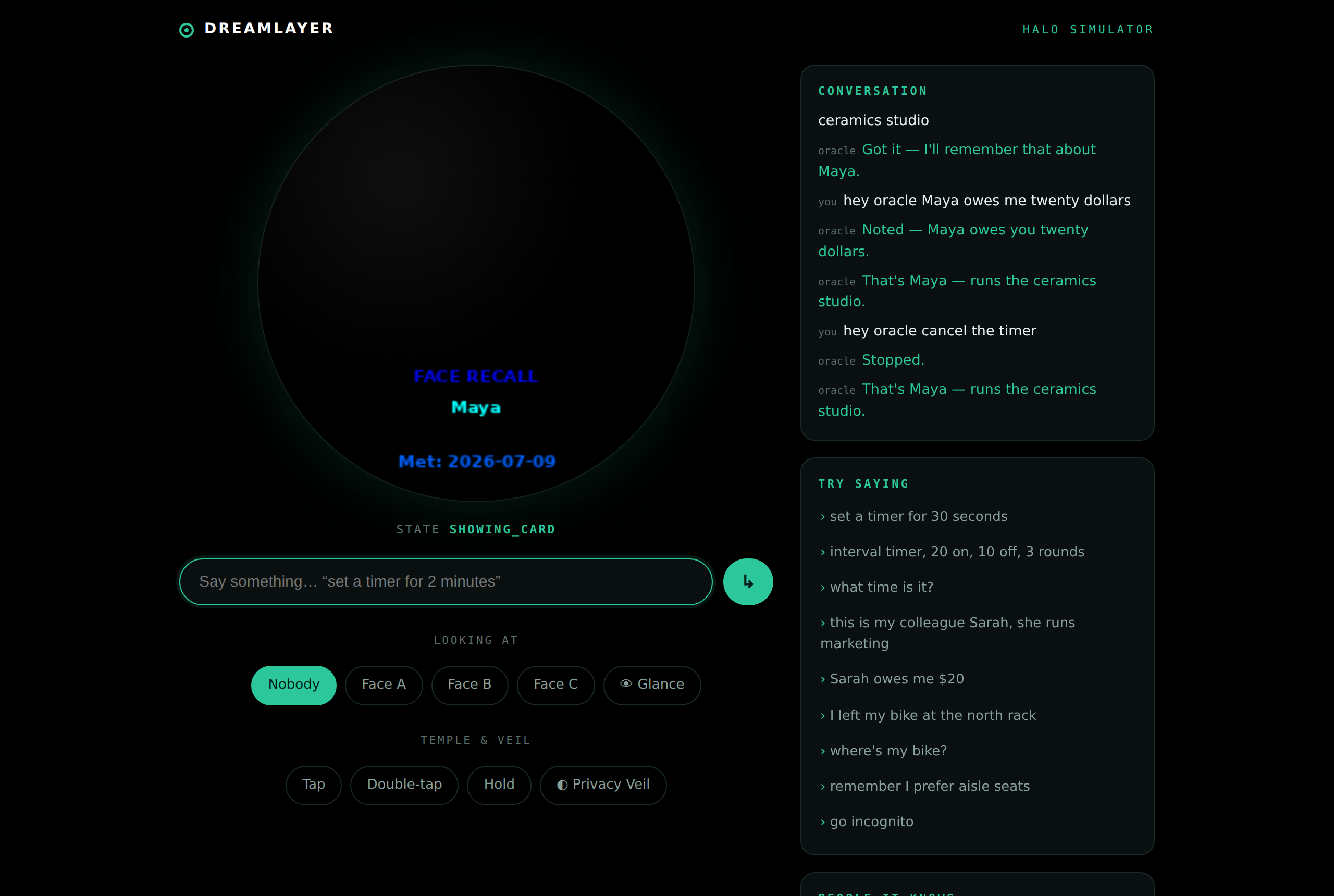
A real session, driven over its little HTTP API:
| "Set a timer for 2 minutes" — a live figment counting down | "Hi, I'm Maya" then a glance — real Social Lens recall |
|---|---|
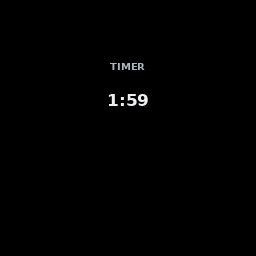 |
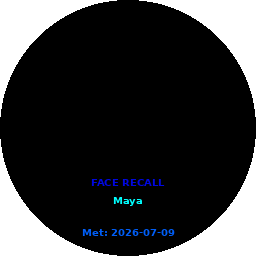 |
Glass Desk rides the same binary: python -m dreamlayer.simulator
--watch my-lens/ is the zero-hardware devkit — it watches a plugin
folder and re-renders its card through the real 256x256 device renderer
on every save, safe-radius ring overlaid, into .glass/glass.png
(--once for CI). Keep the file open in an image viewer and there is a
live glass on your desk.
The API is four POSTs and two GETs: /sim/voice {text, look?},
/sim/glance {look?}, /sim/gesture {name}, /sim/veil {on};
/sim/frame.png returns the current 256 x 256 glass and /sim/state the
transcript, people, and figment state. Everything in this section was
captured through exactly that API — including watching the veil black the
frame.
The in-browser simulator — anyone, right now
The public one is a single static page: the voice grammar, Social Lens, Waypath, native timers, and the HUD renderer ported line-for-line to JavaScript and drawn on a canvas, with a Node harness holding the port to the Python test cases. Six driven scenes — remember a face, never lose things, answer on the glass, live fact-check, morning brief, the Privacy Veil — plus a guided tour, a free-typing box, optional browser-microphone voice input, and look-at face chips.
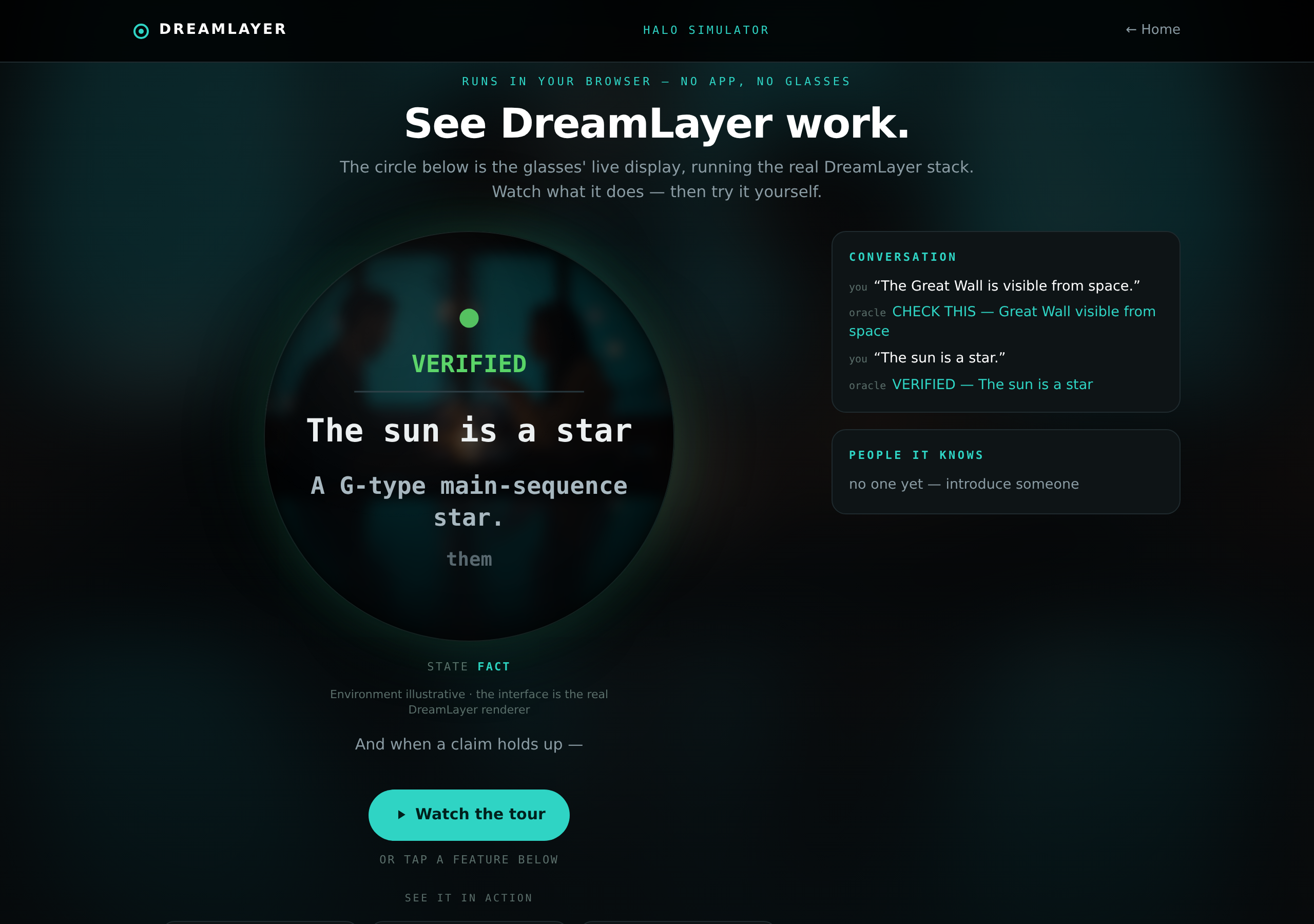
The world behind the lens is now a set of per-scene backdrop clips (first-person, teal-graded, seamlessly looping — one per scene plus an idle world), cross-dissolving as scenes change; a missing clip falls back to the idle world, and reduced-motion holds a still poster. The environment is explicitly illustrative — every pixel on the lens stays the real renderer's output.
Below the scenes sits the interactive "Try it yourself" panel — the free-typing box, gestures, look chips, and example asks. On a desktop it opens itself (the whole point of the page is trying it); on a phone it stays collapsed to protect the fold, one tap away.
The page is honest about its own construction, on the page: the scenery behind the lens is illustrative, and every pixel on the lens is the real renderer's output. It runs with no backend at all — nothing typed into it leaves the browser.
And it is held to product standards, not demo standards: before its
status-agreement fixes merged (#203), a 42-check Playwright pass drove
every control end to end on desktop and mobile — all six scenes, the
guided tour and its any-touch abort, every intent family in the ask box,
introduce-then-glance recall, waypath stash and recall, all three
gestures, and the full Privacy Veil contract (writes refused, recall
blind, clean lift) — with zero JavaScript errors on both viewports; the
standing in-repo check is the lens engine's Node self-test
(figment.selftest.js) plus the JS-Python parity suite. One agreement
bug that pass caught is worth recording: the
status line used to say timer while a freshly-triggered card was
interrupting the countdown on the glass; the status read now mirrors the
renderer's own precedence, so the text and the lens can no longer
disagree.
Why two
- The browser simulator is the front door: the product's feel, thirty seconds after hearing about it, on any device.
- The Python simulator is the workbench: the same orchestrator, ledger, grammar, and stage that ship — so a bug reproduced in the simulator is a bug in the product, and a feature demoed there is a feature that exists.
Both make the pre-hardware claim concrete: the software is not waiting on the glasses to be real.